

Why St. Cloud Ductwork Wears Out Faster Than You'd Expect
St. Cloud's housing stock skews toward homes built in the 1980s through early 2000s. That means most of the flex duct running through attics and crawl spaces is anywhere from 20 to 40 years old. Flex duct has a functional lifespan of around 15 to 25 years under normal conditions. Florida's conditions are not normal.
The combination of high attic heat (attic temps in St. Cloud regularly hit 140 to 160 degrees Fahrenheit in summer), year-round humidity above 70%, and frequent storm pressure changes degrades the inner liner and insulation wrap much faster than in drier climates. The plastic liner gets brittle. The outer jacket develops micro-tears. Mold finds those gaps and moves in.
On top of age and heat, St. Cloud sees its share of pest intrusion. Rats, squirrels, and roof rats are common in Osceola County. They chew through the outer jacket of flex duct to build nests and contaminate the air stream. We find this damage in attics more than anywhere else, and it's often the reason a homeowner's system is running constantly without cooling the house.
Storm damage is also a factor that goes undiscovered for months. A major summer storm can knock supply plenum connections loose or collapse a duct run. The HVAC keeps running, but conditioned air is dumping into the attic instead of the rooms below. Energy bills spike and rooms go stuffy. Most homeowners blame the equipment, not the ductwork.
Understanding these local accelerants matters because they change what repair looks like. A home in a drier state might get away with patching a duct. In St. Cloud, we often find that once we open up an attic, the damage is more widespread than the initial call suggested.
External Resource
The U.S. Department of Energy publishes guidance on duct sealing and insulation as part of its home energy efficiency resources at energy.gov. The Environmental Protection Agency covers indoor air quality and moisture control at epa.gov.
3
Primary Damage Causes in St. Cloud
- ● Aging flex duct past its useful life (20+ years old)
- ● Storm displacement and pressure failures
- ● Pest intrusion and nesting in attic duct runs
Attic Temperatures in St. Cloud
160°F
Peak summer attic heat that degrades flex duct liner and insulation wrap
How Duct Repair Works, Step by Step
Here is exactly what happens when we come out to a St. Cloud home for duct repair, from the initial inspection through final testing.
Visual and Pressure Inspection
We start with a walkthrough of your attic or crawl space. We're looking for disconnected sections, crushed flex duct, tears in the outer jacket, and signs of pest activity. We also check static pressure at the air handler to quantify how much air is escaping before it reaches your registers.
Documenting Every Damage Point
Before touching anything, we photograph each problem area. This gives you a clear picture of what we found and why we're recommending what we are. It also protects both sides from disputes about pre-existing conditions.
Repair vs. Replace Decision
Small tears, single disconnected joints, and localized pest damage are good candidates for repair. If more than 30 to 40 percent of a duct run is compromised, or if the inner liner has become brittle throughout, replacement of that section makes more economic sense than patching it in multiple places.
Sealing and Mechanical Fastening
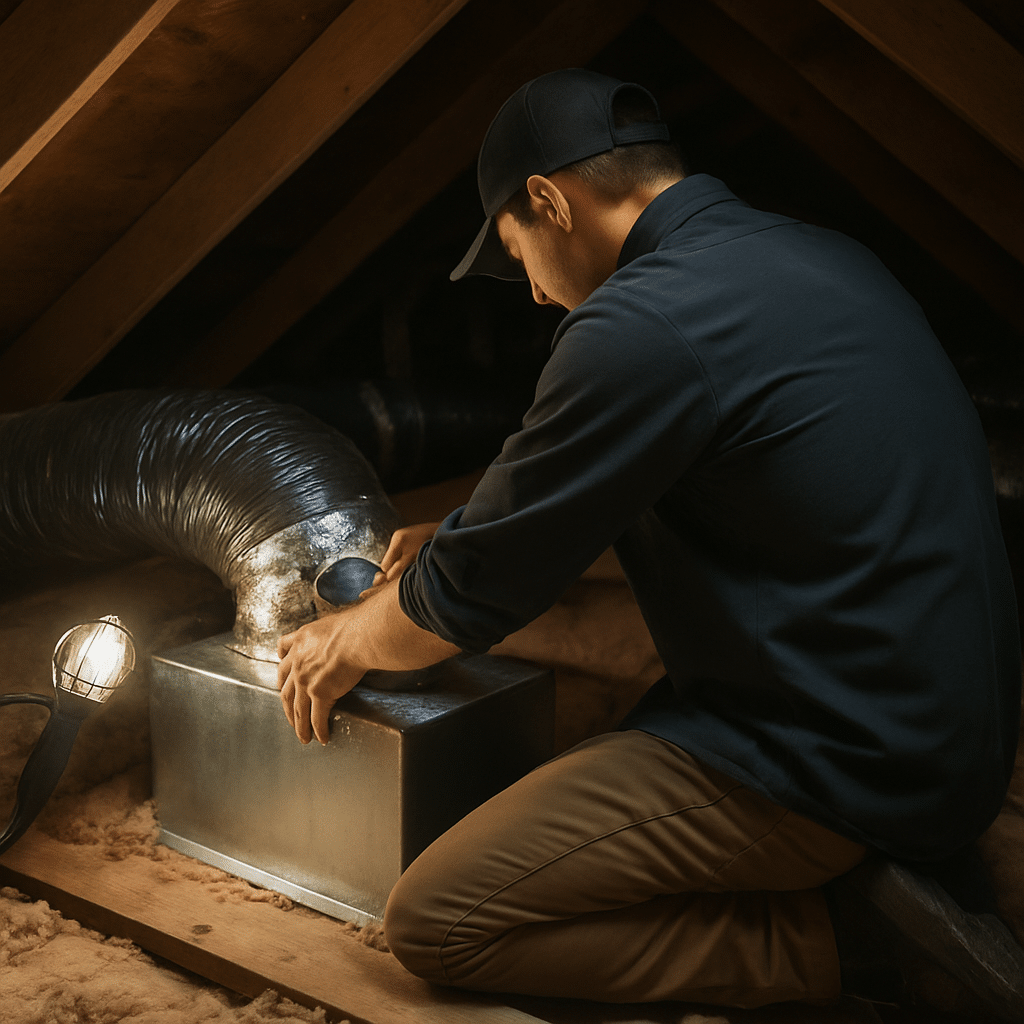
For flex duct repairs, we use UL 181-rated mastic sealant on joints, not standard duct tape, which fails quickly in attic heat. Metal connections get sheet metal screws plus mastic. This is the same standard used for new duct installations. Connections done this way hold up through years of Florida heat cycling.
Insulation Wrap Restoration
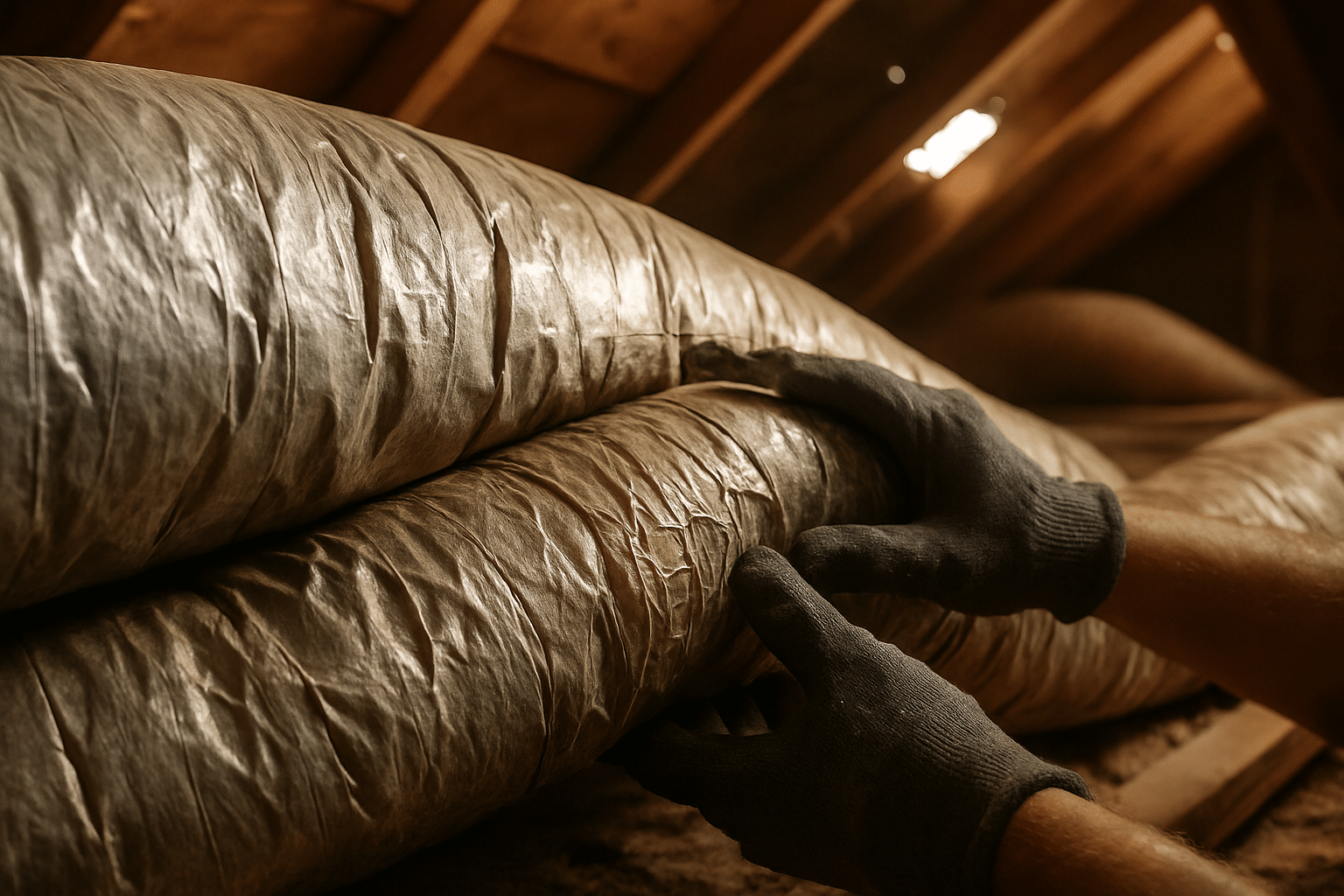
Once a section is repaired, the insulation wrap has to be reinstated properly. In Florida, code requires R-6 or R-8 insulation on ducts in unconditioned attic spaces. Missing or torn insulation wrap means the air inside the duct gains heat before it reaches the room. We bring insulation values back up to code before closing out the job.
Post-Repair Airflow Test
After repairs, we recheck static pressure and measure airflow at each register with an anemometer. The numbers from after the repair should be noticeably better than before. If a room was getting weak airflow, you should feel the difference that same day.
When to Repair vs. Replace Ducts
The repair vs. replace question depends on three things: the age of the ductwork, the extent of damage, and what the overall system condition looks like.
If your flex duct is under 15 years old and the damage is isolated to one or two spots, repair makes sense. A single reconnected joint or a patched tear is a straightforward fix that costs a fraction of full replacement.
If the duct system is 25-plus years old and we're finding brittle inner liner, multiple disconnections, or widespread pest damage, partial or full replacement becomes the better long-term investment. You can patch old duct, but new problems keep appearing because the material itself is failing.
One scenario where we always recommend replacement over repair: confirmed mold contamination inside the duct liner. Mastic sealant and insulation won't fix a mold problem inside the duct itself. That section needs to come out. Learn more about what that process involves at our page on mold in air ducts, removal process, and costs.
How Long Repairs Take
Most duct repair jobs in a standard St. Cloud single-family home take 2 to 4 hours. That covers inspection, documentation, repair work, and post-repair testing.
Jobs involving pest contamination take longer. If we find nesting material or rodent droppings, we have to remove and bag that material before touching the duct, which adds time and requires proper containment. Those jobs can run 4 to 6 hours.
Partial duct replacement on a section that's beyond repair typically adds 1 to 2 hours on top of a standard repair visit. Full duct system replacement on a 2,000-square-foot home is usually a full-day job.
You don't need to vacate the house for a standard repair. For jobs involving mold or heavy pest contamination, we recommend you and any pets stay out of the attic-adjacent areas during the work, but most homeowners stay home without issue.
What Duct Repair Costs in St. Cloud
Cost varies depending on what the inspection finds, but here are realistic ranges for the most common scenarios in St. Cloud.
A single disconnected joint or small tear repaired with mastic and proper re-insulation typically runs in the range of a service call plus materials. More extensive repairs covering multiple points in a duct run will cost more. Partial duct section replacement is a bigger jump, and full system replacement is the largest investment.
We are straightforward about this: we won't give you a firm price over the phone. The attic has to tell us what's there first. What we can promise is that we show you exactly what we found before we quote anything. If you want to see how repair costs compare to sealing costs, the air duct sealing cost guide for the Orlando area gives useful context on what neighboring markets look like.
The bigger cost factor most St. Cloud homeowners overlook is their energy bill. A duct system losing 20 to 30 percent of its conditioned air adds directly to what you pay every month. Repair often pays for itself faster than you'd expect.
Single Joint / Small Tear
Service call + materials. Most economical scenario. Done same visit.
Multi-Point Repair
Multiple damage locations addressed in one visit. Cost scales with extent.
Partial Section Replacement
Replaces a failed run rather than patching. Mid-range investment.
Full System Replacement
Full-day job. Appropriate for systems 25+ years old with widespread failure.
Signs Your Ducts Need Attention Now
Rooms that won't cool down
If one or two rooms stay warm while the rest of the house is fine, you likely have a disconnected or collapsed duct run serving that zone. It's almost never the equipment.
Energy bills creeping up without explanation
A 20% spike in cooling cost with no change in usage habits is a classic sign of duct leakage. Your system is working harder to push air that's escaping into the attic.
Unusual smells from registers
Musty or animal odors coming from vents are often the first sign of pest intrusion or mold inside the duct. Don't mask it with air freshener. Track down the source.
Visible dust or debris at registers
If you're seeing heavy dust or debris at supply registers, especially after a storm, there's a good chance attic material is entering the duct through a breach. That's both a comfort issue and an air quality issue. See how this connects to overall air quality in our professional duct cleaning services overview.
HVAC running constantly
A system that short-cycles or never shuts off is often a sign of duct loss. The thermostat keeps calling for conditioning because the air never reaches the target temperature in the living space.
Florida Humidity and Your Ductwork
Florida's humidity is not just uncomfortable. It is actively destructive to building materials. Flex duct that is already showing age-related brittleness in the inner liner will fail faster in a humid attic environment than a dry one because moisture accelerates the breakdown of the PVC inner liner and the foil facing.
Condensation is a related problem. If the vapor barrier on your flex duct is torn or missing, moisture from the humid attic air can condense on the cooler duct surface during operation. Over time, that condensation saturates the fiberglass insulation inside the duct jacket. Wet insulation loses most of its R-value, and it becomes a substrate for mold growth. This is one of the more insidious failure modes because it's invisible until you cut into the duct.
We recommend that St. Cloud homeowners have their duct system visually inspected every 5 to 7 years, or after any major storm event. Most homeowners don't know their duct system has a problem until the air conditioning bill tells them. By that point, the damage has often been progressing for months.
If mold is a concern after an inspection, air duct disinfection is a step we can combine with repair work to address contamination in the same visit. Similarly, understanding how flexible ductwork is constructed helps you understand why Florida conditions are so hard on it.
Frequently Asked Questions
Can I patch duct tape over a leaking flex duct?
Standard cloth duct tape is not rated for HVAC use. It fails quickly in attic heat. The only proper materials are UL 181-rated mastic sealant or UL 181-rated foil tape. If someone used regular duct tape on your system, it's worth having those connections checked.
How do I know if the repair will actually fix the airflow problem?
We test airflow at registers before and after the repair with calibrated equipment. If a room was getting weak airflow due to duct damage, the numbers will show improvement after the repair is complete. You'll also feel it.
Should I clean my ducts after having them repaired?
If there was pest intrusion or debris entering through a breach, yes. We typically recommend cleaning after any repair that involved contamination. The repair fixes the breach, but the debris inside the duct still needs to come out. Our professional duct cleaning service can be scheduled alongside or shortly after repair work.
Is duct repair something a homeowner can do themselves?
Accessing attic duct runs safely and correctly applying mastic sealant with proper insulation restoration is more involved than it looks. The bigger risk is misidentifying the damage scope. We've seen DIY patches that covered one hole while missing three others. There's more on this at our page on DIY air duct work and its risks.
Does homeowner's insurance cover duct damage from a storm?
It depends on your policy and the specific cause. Sudden storm damage is more likely to be covered than gradual deterioration. We provide detailed documentation with photographs and a written scope of work, which you can submit to your insurer. We don't handle claims, but we give you what you need to file one.
How long after repair before the duct system reaches full efficiency?
Immediately. Mastic sealant cures within a few hours, but the system can be run during the job in most cases. There's no break-in period. You should notice improved airflow the same day repairs are complete.