
Air Duct Inspection
Kissimmee:
Common Mistakes
to Avoid
Most homeowners only think about their air ducts when something goes wrong. By then, the damage is already done. Here is what to watch for — and what not to do — when getting your ducts inspected in Central Florida.
1K+
Learn more about indoor air quality Kissimmee FL in Celebration, FL →
Learn more about air duct replacement Kissimmee →
Learn more about air duct cleaning Kissimmee in Orlando, FL →
Learn more about commercial HVAC duct services Kissimmee in Kissimmee, FL →
Clients Served
2-4h
Typical Job Time
FL
Central Florida
Kissimmee's Air Duct
Inspection Specialists
Air duct inspections are not all equal. A thorough inspection takes 45 minutes to an hour on a standard residential system. A technician should check every accessible register, the main trunk lines, return air plenum, and the area around the air handler. If someone is in and out in 15 minutes, they did not check much.
We serve residential homeowners and commercial property managers across Kissimmee and greater Central Florida. Our certified technicians have completed work for over 1,000 clients, ranging from single-family homes to large commercial buildings with complex duct networks. Each job is handled by experienced professionals who know what Florida's humidity does to ductwork over time.
Florida's climate creates specific problems. High humidity accelerates mold growth inside ducts. Poorly sealed connections draw in hot attic air and spike your energy bills. A visual inspection from the outside of a register grille misses all of this. Our Kissimmee homeowner guide covers what a complete inspection should include.
1,000+
Clients Served Across Central Florida
Residential and commercial properties
2-4h
Average Job Duration
Most residential inspections and cleanings
✓
Certified & Experienced Technicians
Commercial and residential service
What Goes Wrong
During Inspections
These are the most common mistakes we see when homeowners and property managers get their air ducts inspected in Kissimmee. Avoiding them saves time, money, and frustration.
Skipping the Attic Access Points
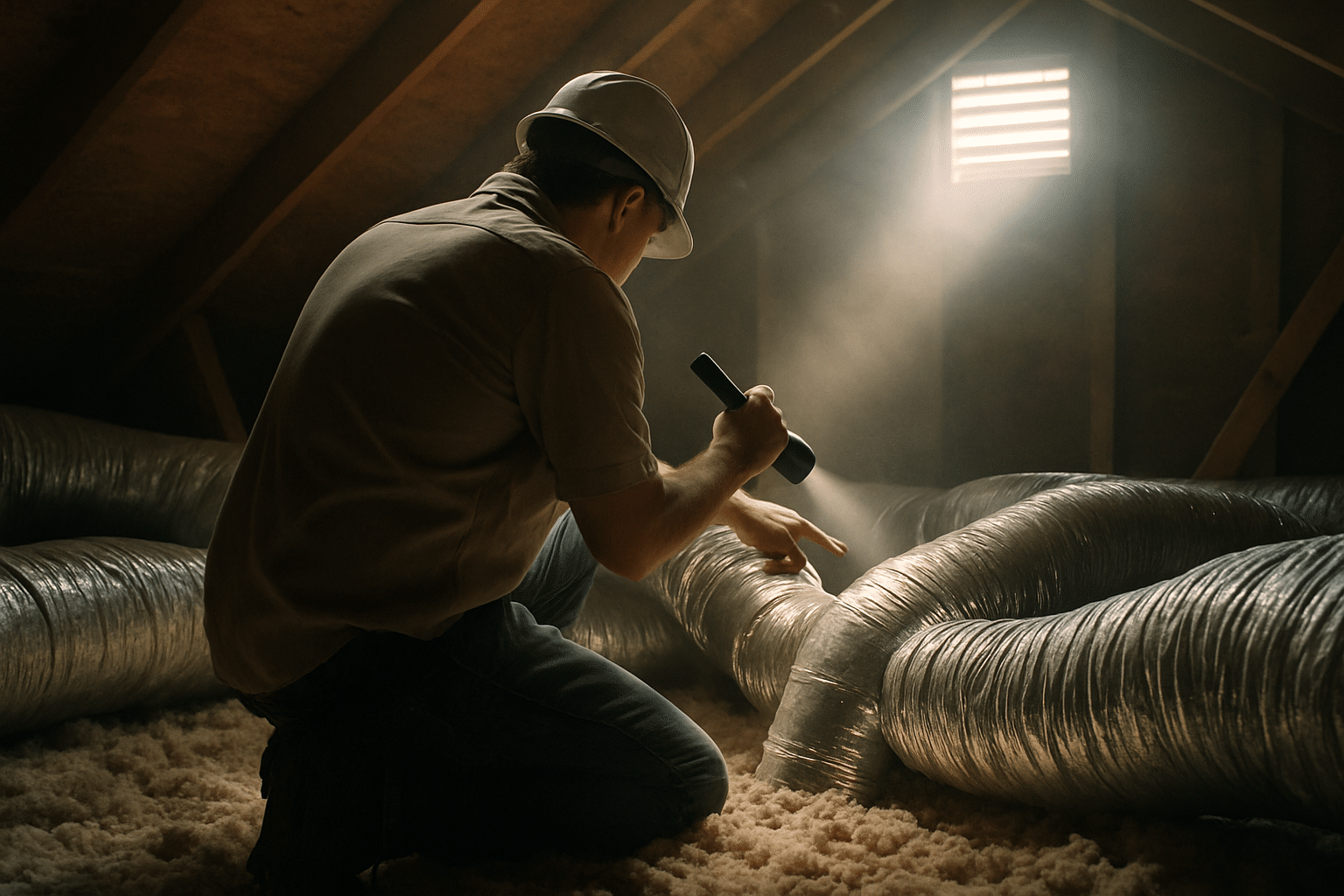
Most duct damage in Central Florida homes happens in the attic. Heat extremes, pest activity, and shifting insulation tear flexible duct connections loose. An inspection that only checks registers inside living areas will miss this completely.
A technician should physically enter the attic and walk accessible sections. They need to check that flexible ducts are not kinked, that connections at the main trunk are still sealed, and that no sections are completely disconnected. Disconnected ducts in attics are more common than most homeowners expect.
Ignoring Return Air Ducts
Supply ducts get all the attention. Return ducts do half the work. Leaky return ducts pull unconditioned air from attics, crawlspaces, or wall cavities directly into your air handler. That means your system works harder and your indoor air quality drops.
Return duct leakage is a leading cause of high energy bills in Florida homes.
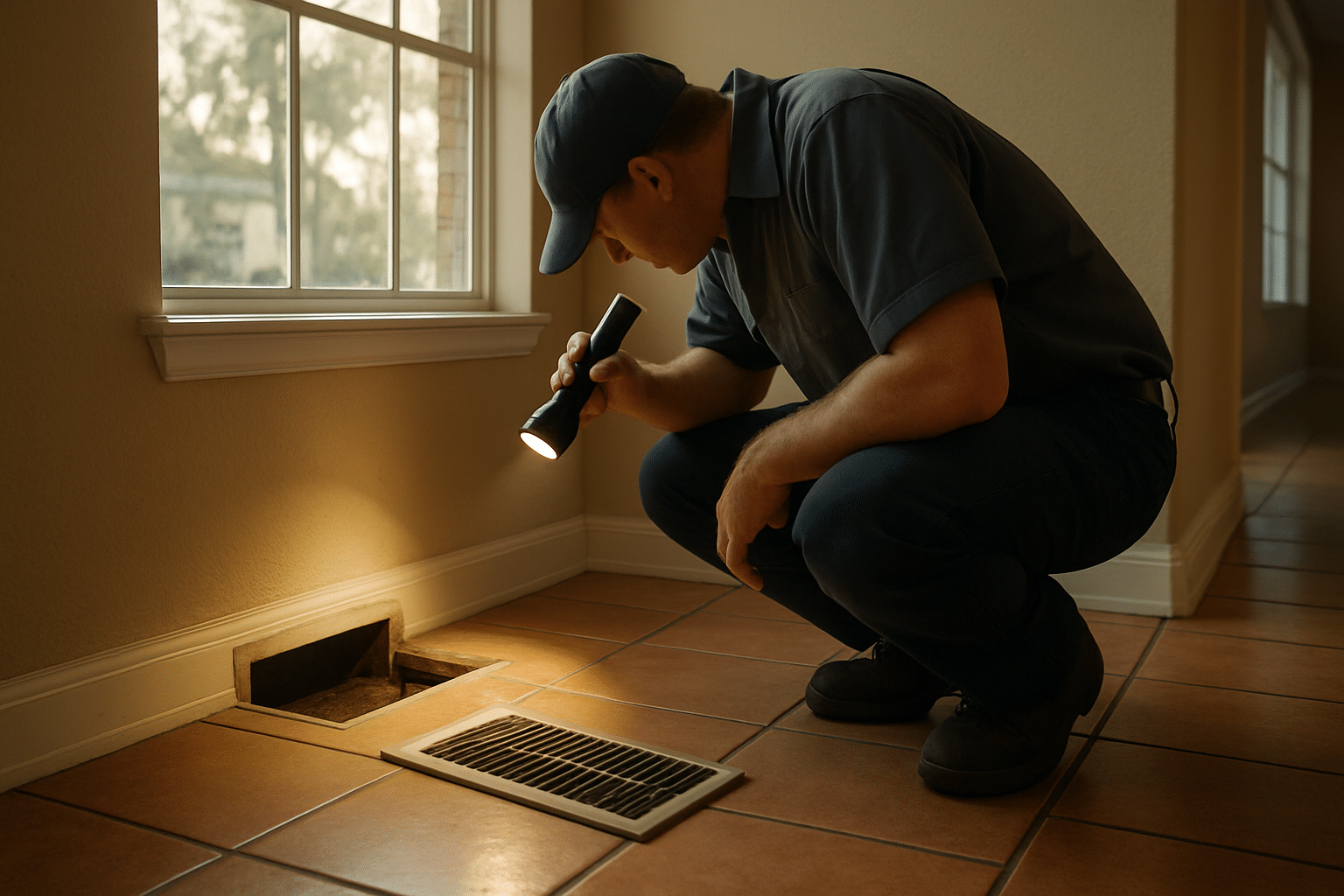
Using Only a Flashlight
A flashlight through a register opening shows you maybe 12 inches of duct interior. It reveals nothing about mold growth deeper in the system, debris buildup near the air handler, or whether flex duct insulation has collapsed. Camera inspection equipment is the baseline for a real assessment.
Not Testing Airflow at Each Register
Weak airflow at specific registers is a diagnostic clue. It can mean a kinked flex duct, a collapsed liner, a disconnected section, or a damper stuck closed. Visual inspection alone does not catch this. Airflow readings at each register, compared against the system's rated output, tell the full story.
This step also helps size the cleaning scope correctly. If three rooms consistently show lower airflow, those branches need priority attention. Skipping this means a cleaning job treats symptoms without finding the cause. See our page on professional duct cleaning services for how we approach this systematically.
Overlooking the Air Handler Cabinet
The air handler is where contamination concentrates. Biological growth on the evaporator coil, debris on the blower wheel, and standing water in the drain pan all affect air quality throughout the entire system. An inspection that stops at the ductwork misses the biggest source of problems.
This is also where UV light air purification systems are installed. If contamination is present at the coil, UV treatment is often the most effective long-term control. The EPA's indoor air quality guidelines address coil contamination directly.
Treating Inspection as a One-Time Event
The EPA recommends inspecting air ducts every 3 to 5 years under normal conditions. Florida's humidity and year-round HVAC use shorten that window. Homes with pets, smokers, recent construction, or occupants with respiratory sensitivities should inspect more frequently.
After any major renovation, inspect before running the system. Construction dust and debris contaminate the entire duct network quickly. Waiting until problems appear costs more to fix.
Signs Your Ducts
Need Attention Now
You do not need to wait for a scheduled inspection if any of these are present. Each one warrants a call.
Uneven Temperature Between Rooms
If one room runs noticeably warmer or cooler than the rest of the house with all vents open, there is likely a duct issue on that branch. Common causes include crushed flex duct, a disconnected section, or a damper that has been knocked out of position. This is not a thermostat problem. Adjusting the thermostat will not fix a duct that is not delivering air.
Higher-Than-Normal Energy Bills
Duct leakage is one of the most underdiagnosed causes of high utility costs in Florida homes. The Department of Energy estimates that leaky ducts can waste 20 to 30 percent of conditioned air before it reaches living spaces. Most homeowners attribute the cost increase to the unit getting older, when the ducts are the actual problem. The DOE's guidance on duct sealing explains how significant the losses can be.
Visible Dust at Registers After Cleaning
Dust rings around supply registers after a thorough cleaning of the home usually mean contamination is inside the duct. The system is pushing debris out with every cycle. A camera inspection will confirm how far in the buildup goes and whether the issue is debris, biological growth, or a combination.
Musty or Stale Smell When the System Runs
A musty smell from registers usually means biological growth somewhere in the system. In Florida, this is almost always tied to moisture. Either the drain line is backed up, the evaporator coil is contaminated, or there is a condensation problem inside the duct near the air handler. Do not mask it with air fresheners. Find the source.
Recent Pest Activity in the Attic or Crawlspace
Rats and squirrels chew through flex duct insulation and the inner liner. They also nest inside ducts, introducing biological material directly into the airstream. After any confirmed pest activity near the HVAC system, inspection is not optional. Check whether flexible ductwork needs replacement sections or full rerouting.
Dryer Vent Warning Signs
Dryer vents are a separate system but share the same neglect pattern. If clothes take two or more cycles to dry, if the exterior vent flap does not open fully during operation, or if the laundry area smells like burning during a cycle, the vent needs cleaning. Clogged dryer vents are a leading cause of residential fires. The cleaning process is typically straightforward and takes under an hour.
What a Real Inspection
Looks Like
A complete air duct inspection in Kissimmee follows a consistent sequence. Here is the actual process, step by step.
System Review
Review the system age, layout, and any known issues before touching anything. Older systems and systems with prior water damage need different inspection priorities.
Air Handler Cabinet
Open and inspect the air handler cabinet first. Check the coil, blower wheel, drain pan, and filter housing. Contamination here affects the entire system downstream.
Camera Through Trunk Lines
Run camera equipment through main trunk lines and accessible branches. Document any visible contamination, debris, or structural issues inside the ductwork.
Attic Walkthrough
Physically inspect all accessible duct runs in the attic. Check flex duct connections, insulation condition, and look for signs of pest intrusion or disconnected sections.
Airflow Testing at Each Register
Measure airflow at every supply register. Low readings on specific branches confirm duct issues that need repair or targeted cleaning before the broader cleaning scope begins.
Return Duct Assessment
Inspect all return air ducts and the return plenum. Check for leakage points where unconditioned air can be drawn into the system from unconditioned spaces.
Written Findings & Recommendations
Document findings with notes and where applicable, photos. Present the homeowner or property manager with a clear summary of what was found and what work, if any, is warranted.
Beyond the
Basic Inspection
Inspection findings often lead to one or more of the following services. We provide all of them, so you are not left with a report and no path forward.
Air Duct Cleaning
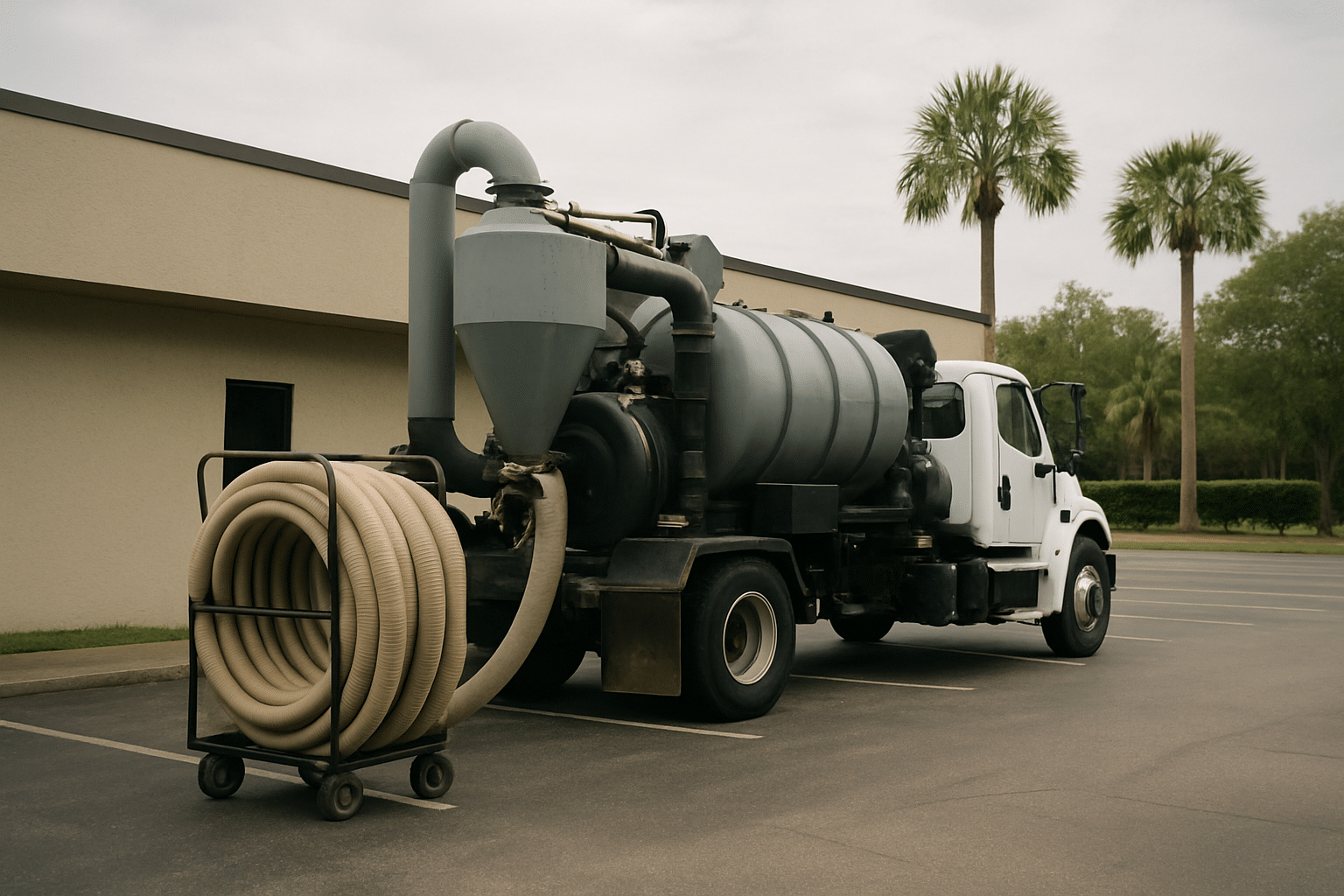
Full system cleaning using HEPA-filtered negative pressure equipment. Removes debris, contaminants, and buildup from supply and return systems. Most residential jobs take 2 to 4 hours. Learn more about our professional duct cleaning services.
Duct Sealing
Aeroseal or mastic-based sealing for leaking connections. Most effective when done after cleaning and before any new insulation is added. Duct sealing typically pays back in energy savings within two to three years in a Florida climate.
Duct Installation & Replacement
For systems where repair is not cost-effective. Older rigid duct systems and badly damaged flex duct networks often reach a point where replacement is more practical than repeated repairs. See our complete guide to air duct installation in Kissimmee.
UV Light Air Purification
UV-C lamp installation at the evaporator coil. Effective for ongoing control of biological growth after a cleaning. Particularly relevant for homes where coil contamination is a recurring issue due to humidity levels.
Dryer Vent Cleaning
Separate from the HVAC system but often scheduled alongside it. Lint buildup in dryer vents is a direct fire hazard. The National Fire Protection Association recommends annual inspection and cleaning of dryer vents.
Residential Service Areas
We serve homeowners throughout Central Florida, with primary coverage across Kissimmee and surrounding communities. See our Kissimmee residential service area.
- ● Kissimmee
- ● St. Cloud
- ● Orlando
- ● Celebration
- ● Poinciana
- ● Lakeland — see Lakeland service page
Commercial Property Services
Commercial duct systems have longer trunk runs, more complex zone damper arrangements, and higher occupancy loads. Inspection frequency matters more in commercial settings because contamination affects more people and regulatory requirements can apply.
We work with property managers, facilities teams, and building owners across Central Florida. Commercial inspections are scoped per building and include a written report suitable for maintenance records.
Questions About
Duct Inspections in Kissimmee
How often should I have my air ducts inspected in Kissimmee?
Every 3 to 5 years is a reasonable baseline. Florida's year-round HVAC use and high humidity accelerate contamination and wear. Inspect sooner after any construction, water intrusion, pest activity, or if you notice any of the warning signs listed on this page. Homes with allergy or asthma sufferers benefit from inspecting on the shorter end of that range.
How long does a full air duct inspection take?
For a typical single-story residential home in Kissimmee, a thorough inspection takes 45 minutes to an hour and a half. Larger homes, two-story layouts, or systems with more complex return duct configurations take longer. If a company quotes you 15 to 20 minutes, that is not a real inspection.
What is the difference between an inspection and a cleaning?
Inspection documents the condition of the system. Cleaning removes the contamination that inspection finds. Cleaning without inspection is guesswork. You may clean a system that does not need it or miss the section that is actually causing problems. A proper sequence is: inspect first, then scope and price the cleaning based on findings.
Can I inspect my own air ducts?
You can check register grilles for visible dust and look into the first few inches with a flashlight. That is about the limit of what is practical without equipment. The parts of the system most likely to have problems are not visible from inside the home without camera equipment or attic access. A homeowner self-check is useful for spotting obvious issues but is not a substitute for a real inspection.
Should I get a duct inspection before buying a home in Kissimmee?
Yes. Standard home inspections typically do not include a detailed duct assessment. Buying a home with badly leaking, contaminated, or pest-damaged ductwork is expensive to discover after closing. Scheduling a duct inspection as part of the due-diligence process gives you real information before you commit. See our 2026 duct cleaning cost guide to understand what remediation might cost if issues are found.
Does duct sealing really save money on energy bills?
In most Florida homes, yes. Leaky supply ducts push conditioned air into attics and wall cavities instead of into rooms. Leaky return ducts pull unconditioned air into the system, forcing the unit to work harder. Sealing these leaks directly reduces the load on your air conditioner. How much you save depends on how leaky the system is before sealing, but in homes with significant leakage, the savings are meaningful over a Central Florida cooling season.
Schedule Your
Kissimmee Inspection
Most problems with air ducts are invisible until they become expensive. An inspection gives you a clear picture of what is actually happening in your system before it shows up as a breakdown, a health issue, or a spike in your energy bill.
We serve residential and commercial properties throughout Kissimmee and Central Florida. Our technicians carry the equipment to do the job right and will give you a plain, honest assessment of what they find. No upselling services you do not need.
Certified, Experienced Technicians
Every job is handled by trained professionals who know Central Florida's specific climate conditions and the duct problems they create.
Residential and Commercial
We work with single-family homeowners and commercial property managers across Kissimmee, Lakeland, and the broader Central Florida region.
Over 1,000 Clients Served
More than 1,000 residential and commercial customers have trusted us with their duct systems across Central Florida.
Full-Service Capabilities
Inspection, cleaning, sealing, installation, UV purification, and dryer vent cleaning. One company for the full scope of the job.
© 2026 Local Air Duct Cleaners Kissimmee. Serving Kissimmee and Central Florida.